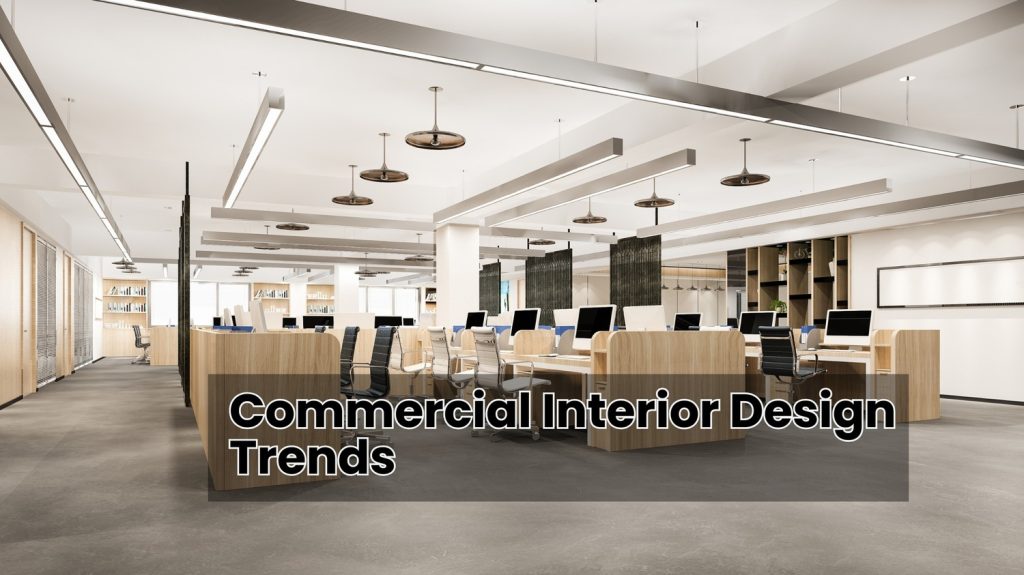
Commercial workspaces are undergoing a significant transformation as businesses redefine how their offices, retail outlets, and customer-facing environments support growth. The workplace is no longer viewed as just a functional space where daily activities take place. It has become an extension of an organization’s culture, values, and long-term vision.
As businesses prepare for 2026, commercial interiors are expected to reflect changing employee expectations, technological advancements, sustainability goals, and the growing need for flexibility. Companies are investing in environments that improve productivity while creating meaningful experiences for both employees and visitors.
Understanding the emerging trends allows business leaders to make informed design decisions that remain relevant for years to come. Rather than following every new concept, organizations should identify solutions that align with their operational objectives and future ambitions.
The Forces Shaping Commercial Interiors in 2026
More than changing design preferences are driving the evolution of commercial spaces. Businesses today operate in an environment where adaptability, employee satisfaction, and efficiency have become essential for long-term success.
Organizations are seeking workplaces that accommodate different styles of working while strengthening collaboration and innovation. At the same time, customers increasingly expect commercial environments to reflect professionalism, credibility, and brand identity. These changing expectations are influencing how commercial interiors are planned, designed, and experienced across industries.
Flexible Environments Are Becoming the New Standard
Traditional office layouts with fixed workstations are gradually giving way to adaptable environments that serve multiple purposes. Businesses are creating spaces that can easily transition between focused work, collaborative meetings, client interactions, and team discussions. Instead of assigning every area a single function, organizations are maximizing the usability of available space.
This flexibility allows workplaces to respond more effectively to changing business requirements without requiring major structural modifications in the future. An adaptable environment also supports organizational growth by accommodating evolving teams and operational priorities.
Employee Well-Being Is Influencing Design Decisions
Employee expectations have changed considerably over the past few years. Modern professionals increasingly value workplaces that support both productivity and personal well-being. As a result, businesses are paying greater attention to indoor comfort, natural lighting, ventilation, acoustic performance, and spaces that encourage relaxation during the workday.
Designing with employee wellness in mind contributes to improved concentration, reduced workplace stress, and a more positive organizational culture. Companies are recognizing that investing in healthier work environments is also an investment in long-term business performance.
Sustainability Is Becoming a Business Priority
Environmental responsibility is no longer considered an optional feature in commercial design. Many organizations are incorporating sustainable practices into workplace planning as part of their broader corporate objectives. The selection of durable materials, energy-efficient lighting, environmentally responsible finishes, and resource-conscious planning helps reduce long-term environmental impact.
Beyond environmental benefits, sustainable workplaces often contribute to lower operating costs, improved maintenance efficiency, and stronger corporate reputation.
Businesses are increasingly viewing sustainability as a practical business strategy rather than simply a design trend.
Technology Is Being Integrated Into Everyday Workspaces
Technology is becoming an essential component of commercial interiors rather than an addition after project completion. Meeting spaces are being designed to support seamless virtual collaboration, while workplaces are incorporating smart lighting controls, automated systems, and integrated digital infrastructure from the beginning of the planning process.
Rather than installing technology around completed interiors, organizations are designing environments where technology and physical space function together. This integrated approach improves workplace efficiency while supporting evolving business operations.
Interior Spaces Are Reflecting Brand Identity More Clearly
Commercial environments are becoming powerful tools for communicating organizational identity. Instead of relying solely on logos or corporate colors, businesses are expressing their values through materials, layouts, finishes, artwork, and overall spatial experiences.
Visitors often form lasting impressions within the first few moments of entering a workplace. A thoughtfully designed environment can reinforce professionalism, innovation, creativity, or trust depending on the organization’s objectives.
As competition continues to increase, businesses are recognizing that interior environments play an important role in strengthening brand perception.
Why These Trends Matter for Businesses in Chennai
Chennai continues to experience growth across industries including information technology, manufacturing, healthcare, education, and professional services. As organizations expand and compete for skilled professionals, workplace quality has become an important factor in attracting talent and supporting employee retention.
Many businesses are also investing in customer-facing environments that create stronger first impressions and enhance overall client experiences.
To achieve these objectives, organizations increasingly collaborate with experienced Commercial interior decorators in chennai who understand local business requirements while incorporating contemporary workplace strategies that support long-term growth.
Selecting trends that align with operational goals enables businesses to create environments that remain effective beyond changing design preferences.
Choosing Trends That Deliver Lasting Value
Rather than implementing every new workplace concept, organizations should evaluate which improvements provide measurable long-term benefits.
Questions worth considering include:
- Will this solution improve employee performance?
- Does it support future business expansion?
- Will it reduce operational challenges?
- Can it adapt to changing workplace requirements?
- Does it contribute to the organization’s overall vision?
Evaluating trends through a business-focused perspective helps organizations prioritize investments that generate meaningful returns instead of temporary visual appeal.
Conclusion
Commercial interior design in 2026 is moving beyond aesthetics toward creating environments that support business performance, employee well-being, sustainability, and technological advancement.
The most successful workplaces will not necessarily be those that incorporate every emerging trend but those that carefully select solutions aligned with organizational goals and long-term strategies.
By understanding the factors driving workplace evolution, businesses can make informed decisions that create functional, adaptable, and future-ready commercial environments capable of supporting growth for years to come.