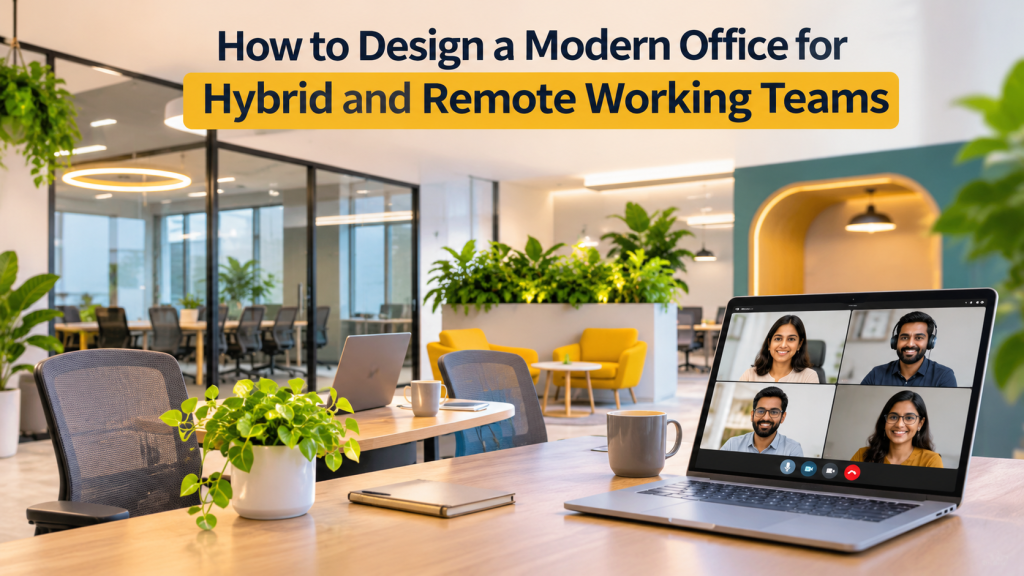
The way people work has changed significantly over the past few years. Many businesses now follow a hybrid working model, where employees divide their time between working from home and coming into the office. As a result, traditional office layouts designed around individual desks and fixed seating are no longer suitable for every organisation.
Today’s workplace needs to support different working styles, encourage team interaction and provide the right environment for focused tasks. Businesses planning such spaces often look for a corporate office interior decorator in Chennai who understands how to balance workplace functionality, employee comfort and modern design requirements. Creating an effective office environment requires careful planning beyond simply choosing attractive furniture or an open floor plan.
1. Create a Flexible Workspace That Adapts to Different Work Styles
In a hybrid workplace, not every employee needs a permanent desk. Some teams may be in the office throughout the week, while others visit only for meetings or collaborative activities. Designing flexible workstations helps businesses accommodate these changing requirements.
Shared desks, hot-desking arrangements and adjustable workstations allow employees to choose a suitable space based on their daily responsibilities. Instead of assigning every person a fixed seating area, businesses can organise workstations according to team requirements and office attendance.
This approach also helps make better use of available floor space without overcrowding the workplace.
2. Design Separate Zones for Collaboration and Focus
A modern workplace should offer different environments for different types of work. While some employees need quiet surroundings to concentrate, others require open spaces for discussions and teamwork.
A well-planned office can include:
- Collaboration areas: Open spaces where employees can exchange ideas, discuss projects and work together.
- Private meeting rooms: Enclosed spaces for client discussions, confidential conversations and team meetings.
- Quiet work zones: Dedicated areas where employees can complete tasks without frequent interruptions.
- Breakout spaces: Comfortable informal areas that encourage casual conversations and creative thinking.
Separating these spaces helps employees move between different activities without disturbing others. It also creates a more organised working environment.
3. Integrate Technology Into Office Design
Technology plays an important role in connecting employees who work from different locations. When designing an office for hybrid teams, digital infrastructure should be considered from the beginning rather than added after the interiors are completed.
Meeting rooms should have suitable video conferencing equipment, quality microphones, clear displays and reliable internet connectivity. Proper placement of screens, cameras and power outlets can make virtual meetings easier for everyone involved.
It is equally important to consider lighting and acoustics. Poor lighting can affect video quality, while background noise can make online conversations difficult to follow. Planning these details during the design stage helps create meeting spaces that work effectively for both in-office and remote participants.
4. Prioritise Employee Comfort and Workplace Well-being
Employees spend a considerable part of their day at work, making comfort an important consideration in office planning. An attractive workspace may create a good first impression, but its everyday usability determines how comfortable people feel over time.
Ergonomic chairs, adjustable desks and appropriately positioned computer screens help support comfortable working postures. Natural lighting can make work areas more pleasant, while proper ventilation and temperature control contribute to a comfortable indoor environment.
Acoustic treatment is another important factor, particularly in offices with open workstations. Using suitable partitions, ceiling materials and sound-absorbing surfaces can reduce unnecessary noise and create a more peaceful atmosphere.
5. Reflect Company Culture Through Office Interiors
An office is also a physical representation of a company’s identity. Its design can communicate the organisation’s values, working style and professional image to employees, clients and visitors.
Brand colours, carefully selected materials, reception design and meeting room aesthetics can create a consistent visual identity throughout the workplace. Common areas can also be designed to encourage employees to interact when they visit the office.
For hybrid teams, these shared spaces have additional importance. They provide opportunities for employees to connect with colleagues, strengthen relationships and maintain a sense of belonging beyond virtual communication.
6. Plan for Future Workplace Requirements
Business requirements rarely remain the same for long. Teams grow, departments change and working arrangements evolve. An office designed only around current requirements may become difficult to manage when these changes occur.
Businesses should consider modular furniture, movable partitions and adaptable meeting spaces that can be modified when necessary. Electrical points, data connections and circulation areas should also be planned with future adjustments in mind.
A flexible layout reduces the need for major changes whenever workplace requirements shift. It allows businesses to make practical improvements while maintaining the overall functionality of the office.
Conclusion
Designing a modern office for hybrid and remote working teams requires a thoughtful balance between flexibility, technology, comfort and collaboration. Every space should have a clear purpose while remaining adaptable to changing business needs.
With experience in planning and executing functional workplace environments, Ensileta provides professional office interior design and turnkey execution solutions tailored to business requirements. A well-planned office can become more than a place employees visit for work; it can create an environment where people connect, collaborate and perform at their best.