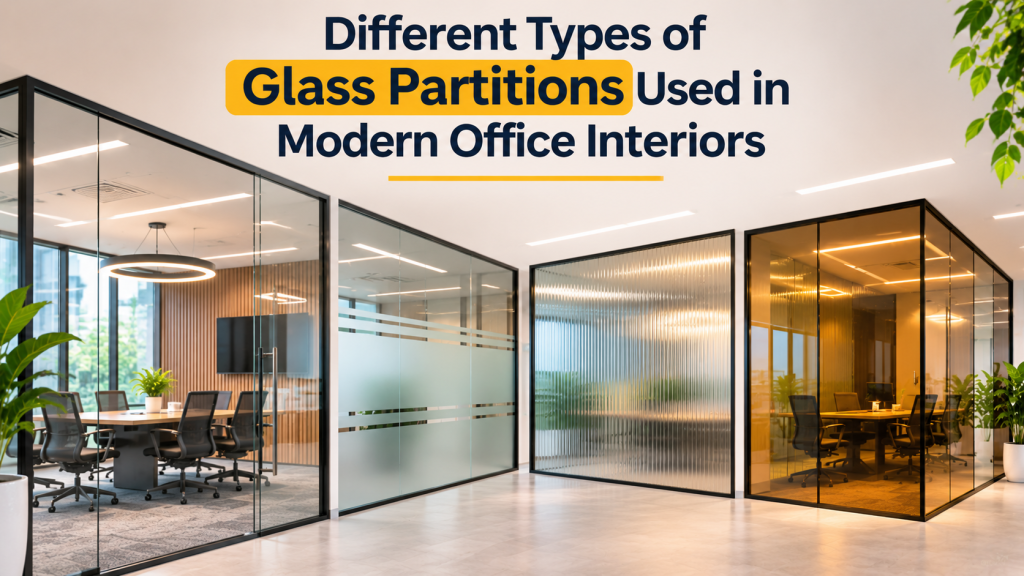
Modern workplaces need layouts that offer privacy without making the entire space feel closed off. Traditional solid walls can divide departments and meeting areas, but they may also limit natural light and visual connectivity. Glass partitions offer an alternative by creating separate functional spaces while maintaining an open and spacious appearance.
However, not all glass partitions serve the same purpose. Some are designed to maintain transparency, while others offer greater privacy or improved sound separation. Understanding the differences can help businesses select the right solution for their workplace requirements.
Clear Glass Partitions for Open Workspaces
Clear glass partitions are a popular choice for businesses that want to maintain an open visual environment. Since the glass is transparent, employees can see across different sections of the workplace without removing the physical separation between them.
These partitions are commonly used for manager cabins, meeting rooms and enclosed work areas. They allow natural light to travel through the space, making the workplace feel brighter and less restricted.
One consideration is privacy. Since everything inside remains visible, clear glass may not be suitable for confidential discussions unless additional privacy features are incorporated.
Frosted and Textured Glass for Better Privacy
For areas that require visual privacy without completely blocking light, frosted and textured glass can be a suitable option.
Frosted glass has a translucent surface that obscures clear visibility while allowing light to pass through. It works well in conference rooms, private cabins and discussion areas where employees need a degree of separation.
Textured glass offers another approach. Its patterned surface creates a decorative effect while reducing direct visibility. Businesses can choose from different patterns and finishes depending on the desired appearance.
These options are particularly useful when a workplace needs a balance between openness and privacy.
Double-Glazed Partitions for Improved Sound Separation
In busy workplaces, conversations from neighbouring rooms can sometimes interrupt meetings and focused activities. Double-glazed partitions are designed to provide better acoustic separation than conventional single-glazed systems.
They consist of two glass panels separated by an air gap. This construction can help reduce sound transmission when combined with appropriate framing, sealing and installation.
Double-glazed systems are often considered for conference rooms, management cabins and spaces where conversations require greater privacy. Their performance depends on the complete partition assembly, including glass specifications, joints, frames and door seals.
For businesses that regularly conduct client meetings or virtual discussions, this can be an important consideration.
Framed and Frameless Glass: What Is the Difference?
Apart from the type of glass, the supporting structure also influences the appearance and functionality of a partition.
Framed glass partitions use supporting profiles, commonly made from aluminium, around the glass panels. The frame provides a defined structure and can be suitable for different partition layouts. It also allows businesses to incorporate doors and dividing sections according to their requirements.
Frameless glass partitions create a cleaner appearance by minimising visible supporting elements. They are often selected for modern reception areas, meeting rooms and executive spaces where a seamless visual finish is preferred.
The choice between these systems depends on the design intent, structural requirements, glass specifications and installation conditions.
Where Different Glass Partitions Work Best
Selecting the right partition becomes easier when the purpose of each area is clearly understood.
Reception spaces can benefit from clear glass partitions that maintain visibility and create a welcoming atmosphere. Conference rooms may use frosted or double-glazed systems depending on their privacy and acoustic requirements.
Manager cabins can incorporate clear glass with blinds or privacy films when flexibility is needed. In collaborative areas, transparent partitions can define separate zones without visually dividing the entire workplace.
The important thing is to choose each system according to how the space will actually be used rather than following the same design throughout the building.
What to Consider Before Installing Glass Partitions
Glass partition selection involves more than appearance. Businesses should consider safety, durability, maintenance and the practical requirements of the building.
Tempered or laminated safety glass should be specified according to the application and relevant safety requirements. Glass thickness, panel dimensions and supporting systems must be selected based on the installation conditions.
For industrial facilities, a modern factory interior designer in chennai can help evaluate where glass partitions are appropriate for administrative offices, meeting rooms and other designated spaces within the facility.
Door placement, access routes, electrical fittings and existing building conditions should also be reviewed before installation. Regular cleaning and suitable hardware selection help maintain the appearance and usability of the partitions over time.
Conclusion
Glass partitions offer different possibilities for creating functional and visually connected workplaces. Whether the requirement is transparency, privacy, acoustic separation or a minimal appearance, selecting the right system depends on the purpose of the space and its everyday usage.
With experience in planning and executing commercial and industrial spaces, Ensileta provides professional design and turnkey execution solutions tailored to business requirements. Thoughtful material selection and proper installation help ensure that glass partitions contribute to a practical, comfortable and well-organised workplace.