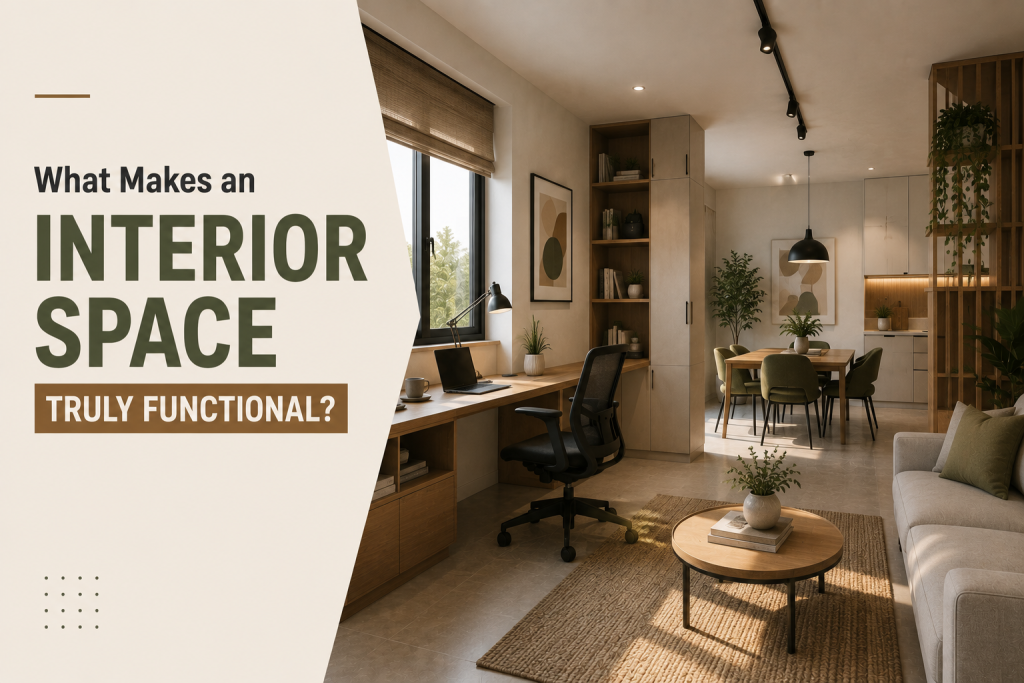
A well-designed interior should do more than create a strong first impression. It should make everyday activities feel natural, convenient and comfortable. A space may have attractive finishes and carefully selected furniture, yet still become frustrating if people struggle to move around, find what they need or use the facilities comfortably. True functionality comes from understanding how an environment will be experienced throughout the day and making design decisions that support those needs.
Function Begins With Understanding People
Every space has its own users, routines and expectations. A design that works well for one group may not necessarily suit another. Before deciding on the arrangement, it is useful to understand who will use the environment, what activities will take place and how frequently different areas will be accessed. Some users may need quiet surroundings, while others may spend much of their time communicating or moving between different areas.
When these patterns are understood early, design decisions become more purposeful. Instead of creating a space based purely on appearance, the environment is shaped around real behaviour.
Accessibility and Ease of Movement
Movement is one of the simplest ways to judge whether a space works. People should be able to enter, move between areas and reach frequently used facilities without unnecessary obstacles.
Door positions, pathways, furniture clearances and access points all contribute to this experience. A crowded passage or poorly positioned element can create inconvenience every day, even if the issue appears minor during the design stage.
Good circulation does not demand attention. People simply move through the environment without having to think about where to walk or how to get around something.
Storage and Organisation Have a Functional Role
An organised space is easier to use, and storage plays a major role in achieving that order. When frequently used items have no designated place, surfaces quickly become cluttered and useful areas can become difficult to maintain.
Storage should therefore be planned around actual requirements. Items that are accessed regularly should be convenient to reach, while less frequently used materials can be positioned elsewhere.
The right solution is not necessarily more storage. It is storage that is appropriately sized, positioned and connected to the activities taking place around it.
Furniture Should Support the Way People Work and Interact
Furniture occupies a significant part of an interior, so its selection can influence both comfort and usability. Dimensions, positioning and clearances need to correspond with the people using the space and the activities being carried out.
Work surfaces should allow comfortable use, seating should support the intended duration of activity, and shared furniture should encourage interaction without obstructing movement. An experienced office interior designer in Chennai can evaluate these relationships while developing the overall arrangement.
The objective is to make furniture part of the solution rather than allowing it to become an obstacle within the layout.
Lighting and Acoustics Influence Everyday Comfort
Functionality is also influenced by what people see and hear. Insufficient illumination can make detailed activities difficult, while excessive brightness or glare can become uncomfortable over time.
Sound is equally important. Conversations, equipment and movement can create distractions when areas with different acoustic requirements are positioned too closely together. A considered interior accounts for these conditions so that people can concentrate, communicate and carry out their activities without unnecessary sensory distractions.
Flexibility Gives a Space Longer-Term Value
A functional interior should not become outdated simply because requirements change. The number of users may increase, activities may evolve or new equipment may need to be introduced.
Where possible, adaptable arrangements can make these changes easier to accommodate. Movable elements, multipurpose areas and layouts that allow reasonable reconfiguration can give the environment greater longevity.
Flexibility does not mean designing without structure. It means allowing enough room for the space to respond when circumstances change.
Practical Details Often Make the Biggest Difference
Some of the most valuable design decisions are easy to overlook because they are not visually dramatic. The convenient placement of switches, controls, power access and essential facilities can have a noticeable effect on everyday use.
Surface selection also matters. Areas that experience frequent contact or heavy use should be practical to clean and maintain. Clear visibility and straightforward navigation can further improve the experience.
These details demonstrate that functionality is often built through many small, carefully considered choices rather than one standout feature.
How Professional Design Brings Everything Together
There have to be different considerations working together to create a functional environment. The user requirements have to be related to the physical arrangement, but also furniture, accessibility, comfort and future needs have to be taken into account without losing the visual consistency.
An experienced office interior designer in Chennai will be able to consider these factors as part of an integrated design process. The idea is to create a system where the individual components interact and work together to create a more seamless experience . Instead of individual decisions being made in isolation .
Conclusion
A truly functional interior is one that quietly makes everyday activities easier. People should be able to move comfortably, stay organised, use furniture effectively and interact with their surroundings without constantly adjusting to the space.
For distinctive environments such as Epix Entertainment, functionality can also support the overall visitor experience by making movement, interaction and engagement more natural. Ultimately, successful interior design is not just about what people see; it is also about how effortlessly they can use the space.